

The output speed of Spur Gear Slew Drives is not a fixed value but is flexibly adjusted according to actual working load and operating conditions, which is a key feature that ensures the drive’s transmission efficiency and service life.
Under light-load working conditions (characterized by stable operation, low torque demand, and no obvious tilting moment), the drive can achieve a maximum output speed of 20 revolutions per minute (rpm). This speed range is ideal for scenarios such as lightweight material handling equipment, automated assembly turntables, and precision positioning systems, where it can balance high transmission efficiency and low gear wear, meeting the needs of efficient and stable operation.
For heavy-load or high tilting moment working conditions (e.g., construction machinery, large-scale lifting equipment, and heavy-duty mining devices that bear large loads and significant tilting forces), the recommended maximum output speed is 5 rpm. This conservative speed limit is designed to reduce the meshing impact between gears, lower the stress on bearings and other key components, and avoid structural deformation caused by excessive load. By adhering to this speed guideline, the service life of the drive can be significantly extended, and the long-term stable operation of equipment under harsh conditions can be guaranteed.
In practical applications, selecting the appropriate output speed based on the actual load is crucial to maximizing the performance of Spur Gear Slew Drives. It not only ensures the efficiency of power transmission but also effectively prevents premature failure of the drive due to improper speed settings.
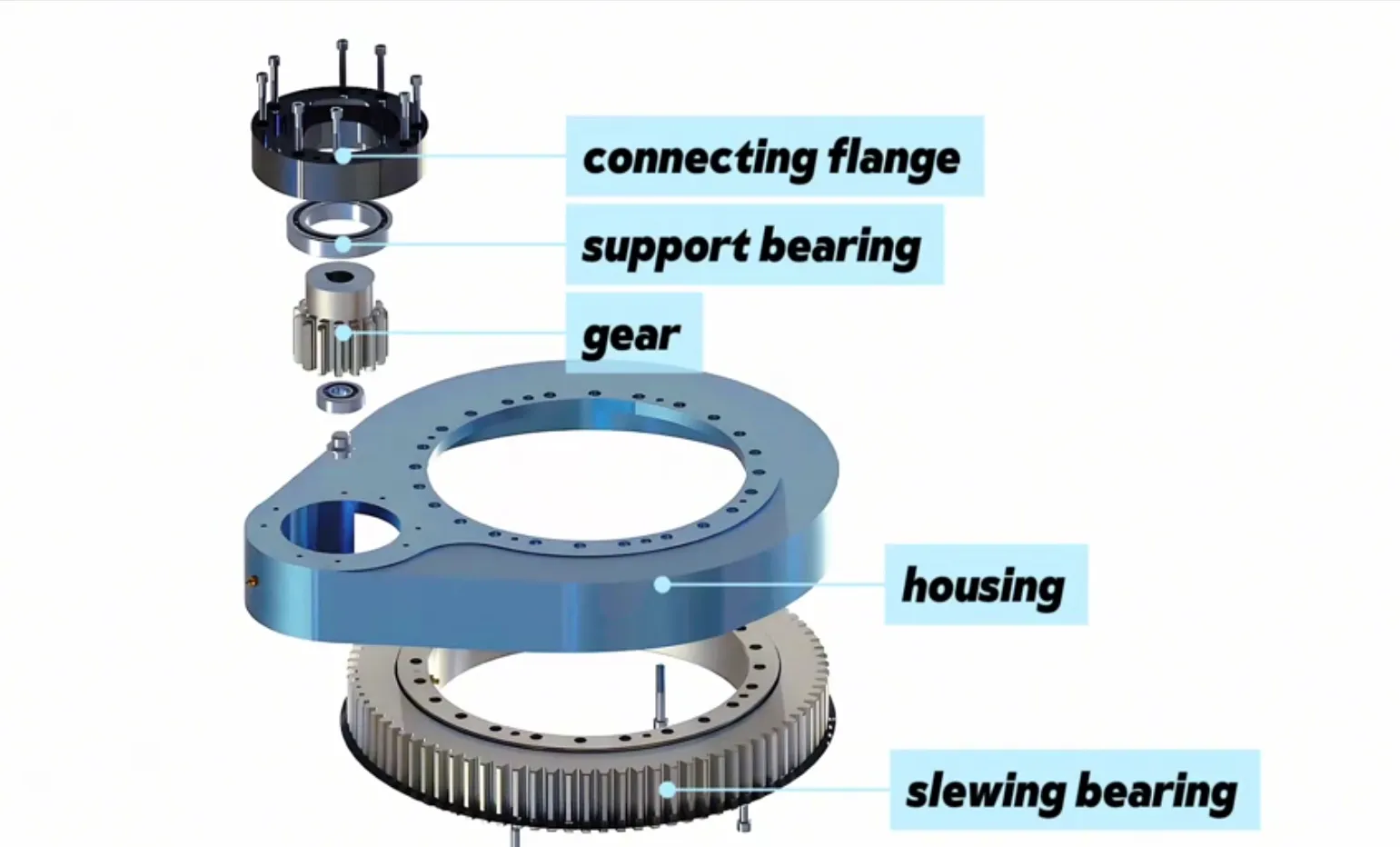
Structural Composition, Performance Characteristics and Applicable Products of Spur Gear Slew Drive
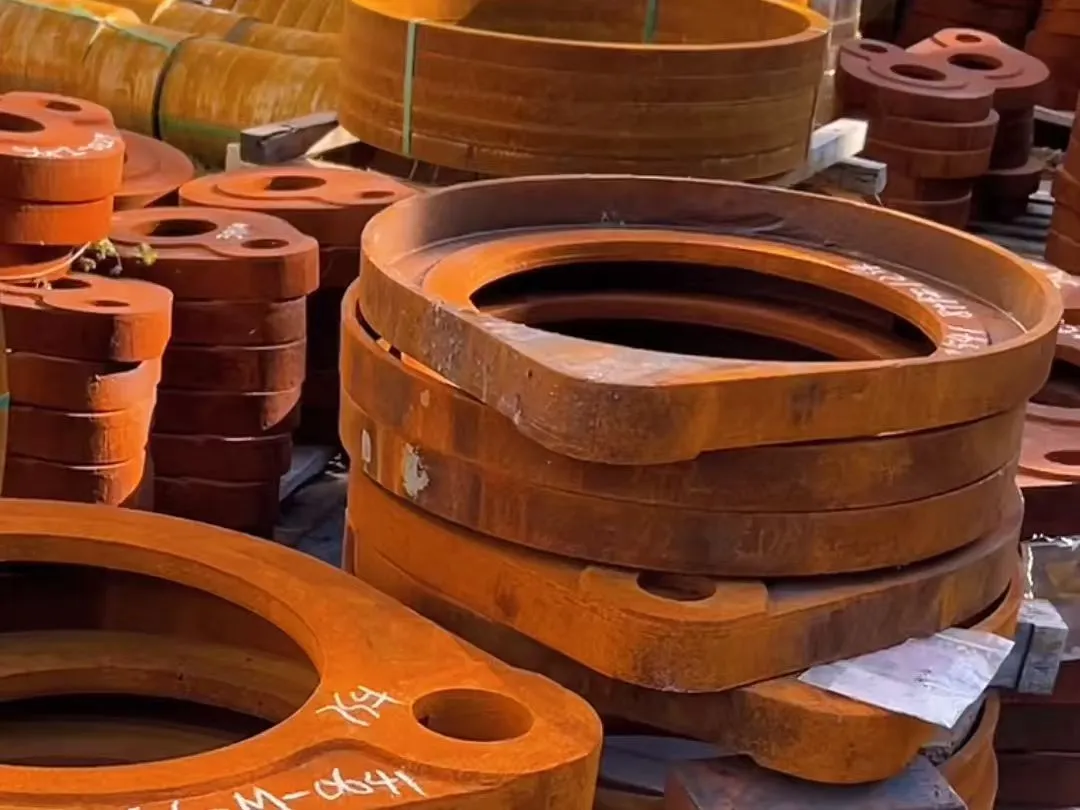
As a professional manufacturer of spur gear slewing drives, Luoyang LDB Bearing strictly controls the key casting process of housings. All cast housing blanks must be stored outdoors for more than three months to fully release residual stress before formal CNC machining and assembly. This is one of the core processes to ensure long-term stability and durability of the complete unit.
Spur Gear Slew Drives feature a structurally optimized design with customizable protective configurations, enabling them to adapt to various harsh working environments and maintain stable transmission performance. Their protective performance is mainly reflected in the following aspects
Electric MotorsThis is the most common and mainstream matching power source. AC asynchronous motors, DC servo motors, and stepping motors can all be directly connected to the drive via a coupling or reducer adapter. It is particularly suitable for precision transmission scenarios such as automated production lines and CNC equipment, where it can leverage the high control accuracy of motors to achieve stable speed regulation and positioning.
Chat Online
Get A Quote