

Output speed is one of the most intuitive differences between spur gear slew drives and slewing drives. Thanks to the structural characteristics of their gear meshing, spur gear slew drives offer superior high-speed transmission capabilities, with output speeds significantly higher than those of slewing drives.
From the perspective of structural principles, the tooth direction of spur gears is parallel to the gear axis. This results in low transmission resistance during meshing and high power transmission efficiency, enabling stable power output even at relatively high input speeds. Spur gear slew drives are therefore suitable for transmission scenarios requiring high-speed operation.
In contrast, slewing drives typically adopt a combined structure such as worm gears and planetary gears. Their design prioritizes low-speed, high-torque power output, featuring a larger gear reduction ratio in meshing. Consequently, their output speeds are generally low, making them unable to meet high-speed transmission requirements. For instance, in high-speed conveying mechanisms of automated production lines, spur gear slew drives can achieve stable output at several hundred revolutions per minute, a speed level that slewing drives cannot match in such scenarios.
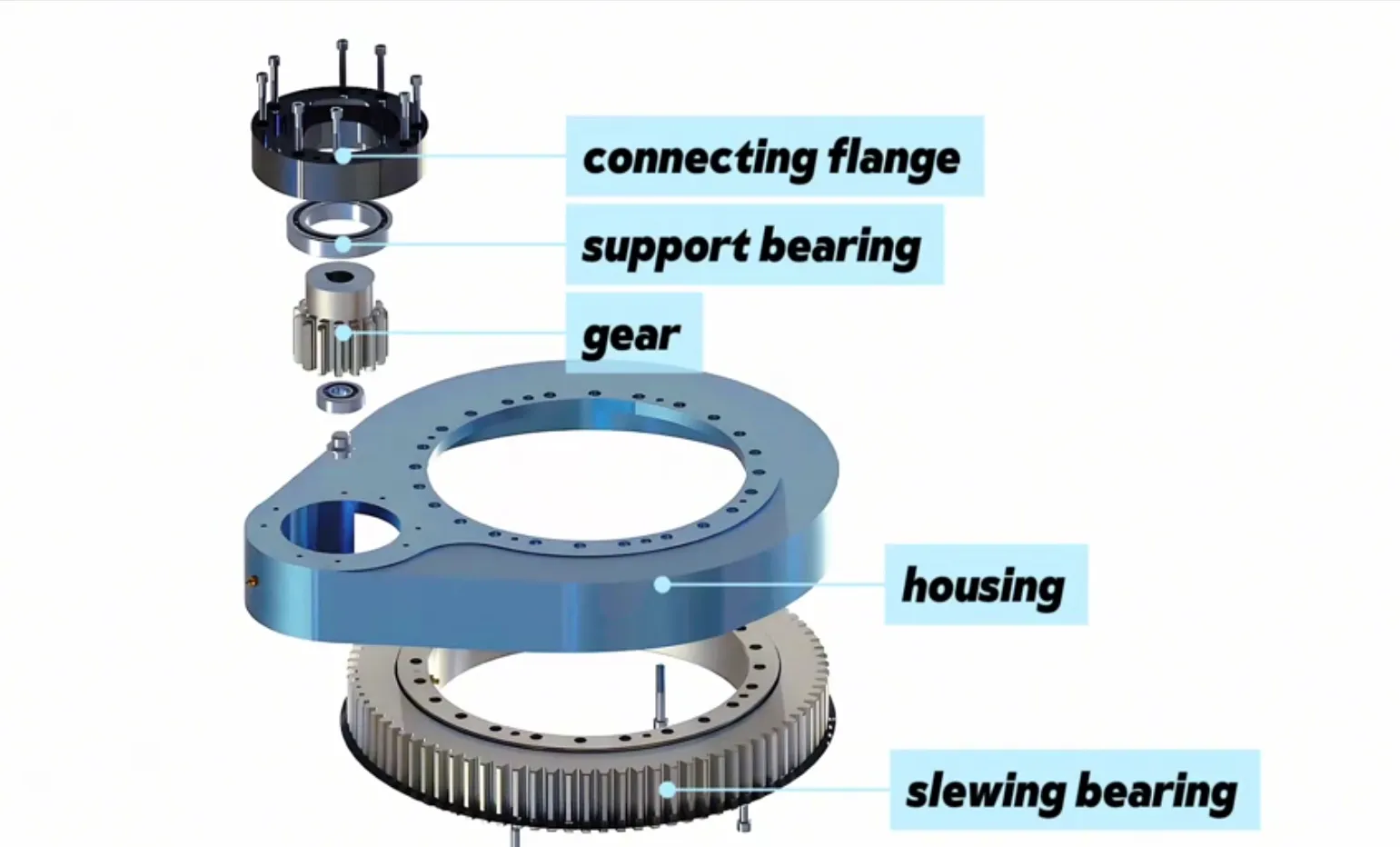
Structural Composition, Performance Characteristics and Applicable Products of Spur Gear Slew Drive
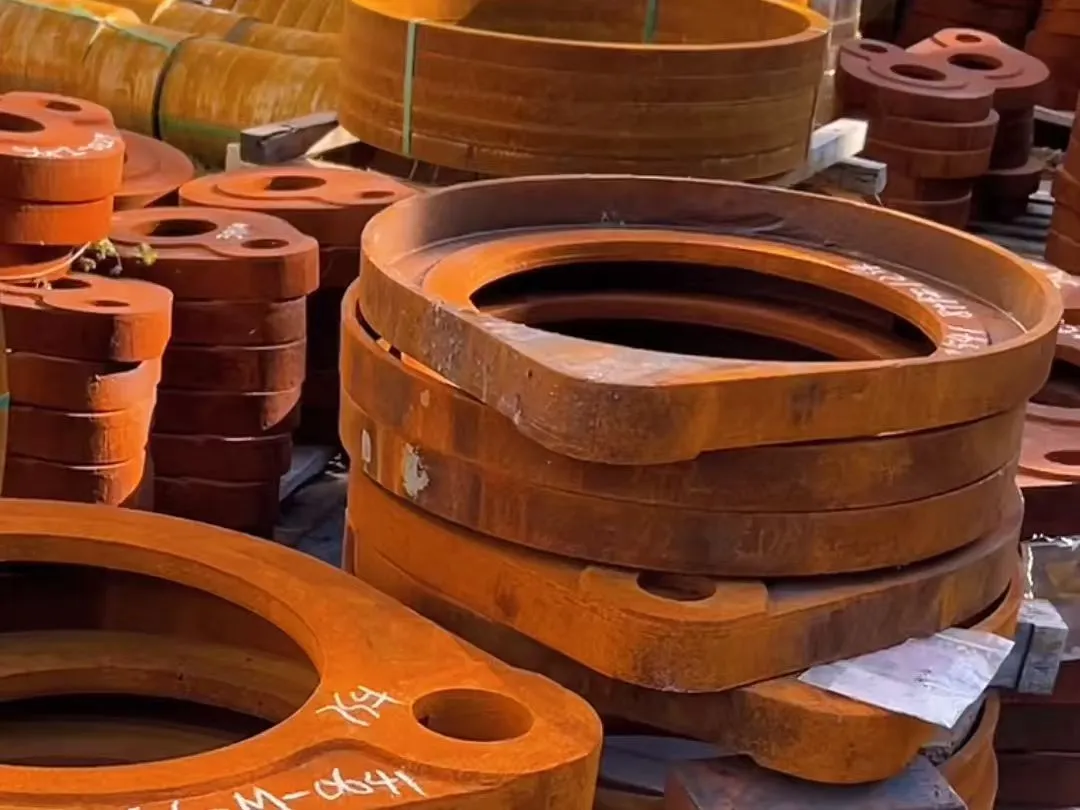
As a professional manufacturer of spur gear slewing drives, Luoyang LDB Bearing strictly controls the key casting process of housings. All cast housing blanks must be stored outdoors for more than three months to fully release residual stress before formal CNC machining and assembly. This is one of the core processes to ensure long-term stability and durability of the complete unit.
The output speed of Spur Gear Slew Drives is not a fixed value but is flexibly adjusted according to actual working load and operating conditions, which is a key feature that ensures the drive’s transmission efficiency and service life.
Spur Gear Slew Drives feature a structurally optimized design with customizable protective configurations, enabling them to adapt to various harsh working environments and maintain stable transmission performance. Their protective performance is mainly reflected in the following aspects
Chat Online
Get A Quote